10 Best Web Development Services: The Ultimate Guide
Discover the 10 best web development services businesses can use to build a professional, secure, responsive, and high-performing online presence.
Introduction
Web Development Services can help turn your website into more than just an online presence. A professional website is no longer just an online brochure. It can become a sales channel, customer service tool, booking platform, communication hub, or complete business application. For this reason, choosing the right web development services is an important step for businesses planning a new website or improving an existing one.
Different businesses have different digital requirements. A small business may need a fast and responsive website. An online retailer may require a complete e-commerce platform. A growing company may need a custom web application that connects with its CRM, payment systems, inventory tools, or internal software.
The challenge is knowing which services are worth considering. Web development covers many areas, from custom development and responsive design to security, API integration, maintenance, and performance optimization.
What Are Web Development Services?
Web development services include the technical and creative work involved in planning, building, launching, and maintaining websites and web-based applications. These services can range from simple business websites to complex platforms that support thousands of users.
A development project often involves several stages. These may include requirement analysis, planning, UI/UX design, front-end development, back-end development, testing, deployment, and ongoing maintenance.
The exact services you need depend on your business model and goals. For example, a company selling products online may prioritize e-commerce development. A business that manages large amounts of customer data may need custom web application development and API integration.
Before selecting a provider, define what you want your website to achieve. This makes it easier to identify the right technology, features, budget, and development partner.
Why Businesses Need Professional Web Development
A professionally developed website can improve how customers interact with your business. It can make information easier to find, simplify transactions, and provide a consistent experience across devices.
Professional development also helps with performance and security. A properly built website can load faster, handle traffic more efficiently, and reduce common technical problems.
Businesses can also use websites to automate repetitive processes. For example, a website can handle bookings, customer registrations, online payments, support requests, and lead collection.
Working with experienced developers can help you avoid technical decisions that may create problems later. A good team considers scalability, security, integrations, and maintenance during the planning stage.
How Web Development Consulting Supports Business Growth
Not every business knows which technologies or features it needs. Web development consulting can help companies define their technical requirements before development begins.
A consultant can review your business goals, existing systems, target users, and future plans. They can then recommend a suitable technology approach and development strategy.
Consulting can also help with project planning. Businesses can use this stage to define scope, estimate resources, prioritize features, and identify potential risks.
This is particularly useful for larger projects. Making the right technical decisions early can reduce expensive changes during development.
How to Choose the Right Services for Your Website
There is no single package that works for every business. The right combination of services depends on your goals, users, budget, and technical requirements.
Before choosing a provider, consider the type of website you need, the features it must support, the platforms it should connect with, and how you expect it to grow.
The following ten services are among the most important options to evaluate.
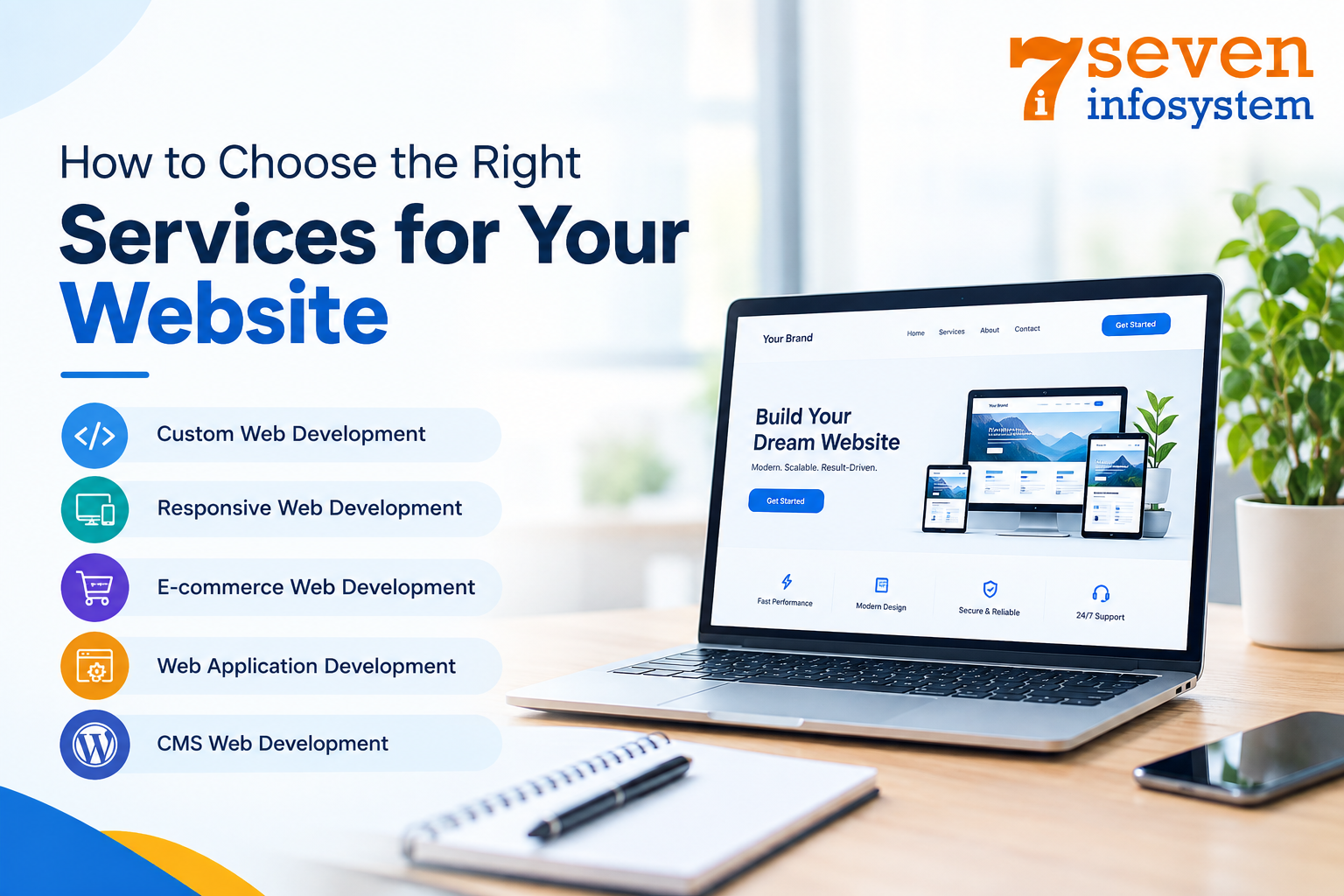
1. Custom Web Development
Custom web development focuses on creating a website or platform around your specific business requirements. Instead of relying entirely on pre-built templates or standard functionality, developers build features according to your needs.
This approach can work well for businesses with unique workflows or specialized requirements. It can also provide greater flexibility as the business grows.
Custom development may include front-end interfaces, back-end systems, databases, dashboards, user accounts, payment features, and third-party integrations.
Before choosing custom development, define which features actually require customization. Not every website needs a completely custom solution. A clear requirements document can help you decide where custom development adds value.
2. Responsive Web Development
People access websites through smartphones, tablets, laptops, and desktop computers. Your website should provide a consistent experience across these devices.
Responsive web development allows a website's layout and elements to adapt to different screen sizes. Navigation, images, buttons, forms, and content can adjust based on the user's device.
Mobile responsiveness can also improve usability. Visitors are less likely to leave when they can easily read content and interact with your website.
When evaluating a provider, ask how it tests websites across different browsers and screen sizes. Responsive development should be considered from the beginning rather than added as an afterthought.
3. E-commerce Web Development
E-commerce development focuses on creating websites where customers can browse products, add items to a cart, make payments, and track orders.
A professional e-commerce project may include product catalogs, search and filtering, shopping carts, payment gateway integration, customer accounts, order management, inventory features, and reporting.
Security is especially important for online stores. Payment processes and customer information need appropriate protection.
Businesses should also consider scalability. Your e-commerce platform should be able to handle increased traffic and product volume as the business grows.
When comparing providers, review their experience with similar stores. Look at both the customer-facing website and the administrative features available to business teams.
4. Web Application Development
Web application development involves building interactive applications that run through a web browser. Unlike a basic informational website, a web application often allows users to perform tasks, manage data, or interact with business systems.
Examples include customer portals, booking systems, project management tools, dashboards, learning platforms, and online marketplaces.
Businesses looking for web application development services should evaluate both front-end and back-end capabilities. The development team should understand databases, APIs, authentication, security, performance, and scalability.
The development process usually begins with requirements and user flows. Developers then create the architecture and build the application's core functionality.
Testing is also important. Web applications often handle sensitive information or business-critical processes, so reliability matters.
Website App Development vs. Traditional Websites
Website app development is more focused on functionality and interaction than a traditional business website.
A standard website may mainly provide information about products, services, locations, or company details. A web app allows users to complete tasks directly through the browser.
For example, a restaurant website may display a menu and contact information. A restaurant web application could allow customers to create accounts, make reservations, order food, and track orders.
The right approach depends on what your users need to accomplish online.
5. CMS Web Development
A content management system, or CMS, allows businesses to create and manage website content without editing code for every update.
CMS development can include website setup, theme or interface customization, plugin integration, custom functionality, security configuration, and performance improvements.
A CMS can be useful for businesses that publish content regularly. Marketing teams can update pages, publish articles, add images, and manage other content through an administrative interface.
When selecting a CMS, consider ease of use, security, scalability, customization, and integration requirements.
Your development partner should also explain which CMS best fits your project rather than recommending a platform simply because it is familiar.
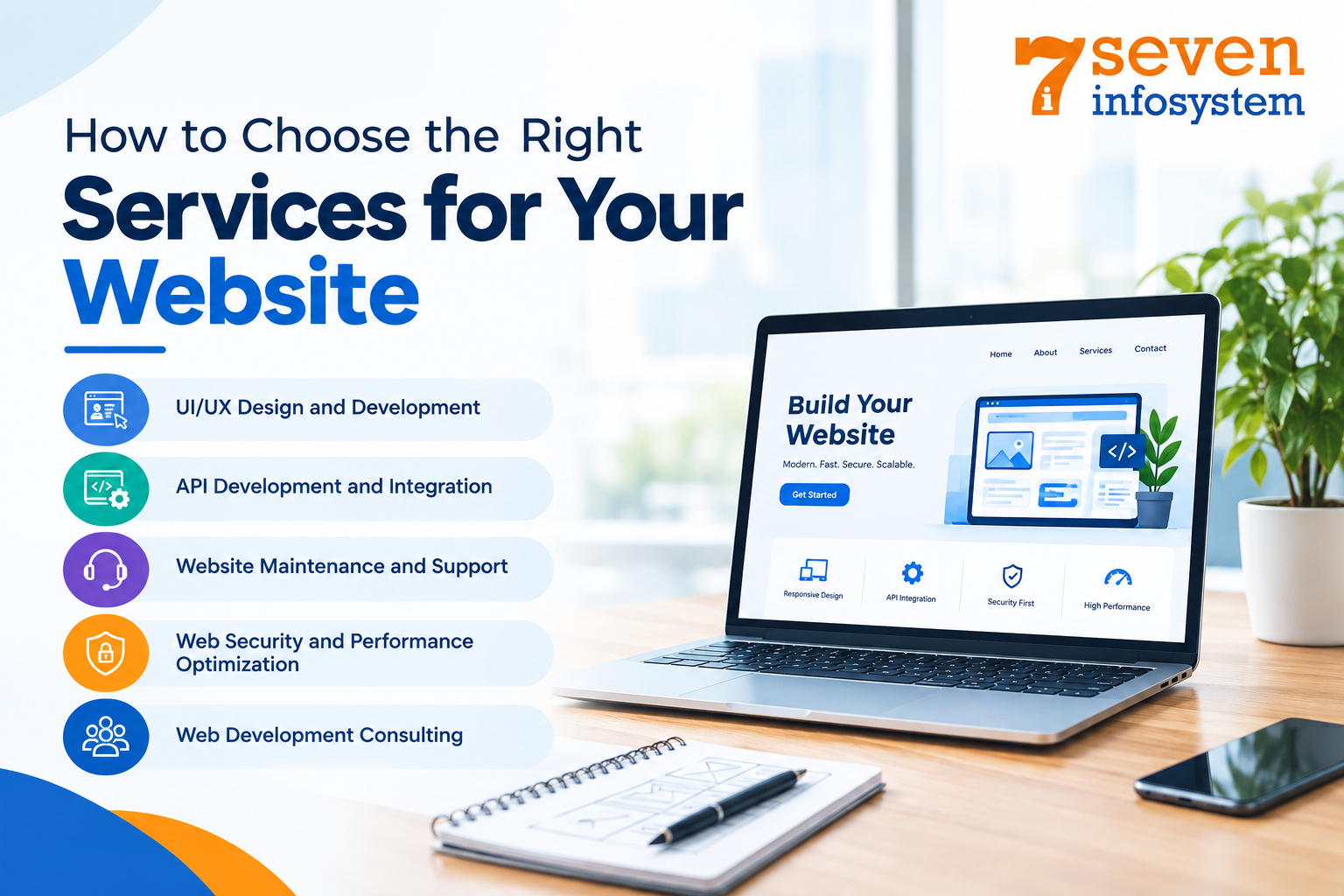
6. UI/UX Design and Development
A website needs more than attractive visuals. Users should be able to understand the interface and complete their tasks without confusion.
UI/UX design focuses on the structure, appearance, navigation, and overall user experience of a digital product.
The process may include user research, wireframes, prototypes, visual design, usability testing, and front-end implementation.
Good UX can reduce friction throughout the customer journey. Clear navigation can help visitors find information quickly. Well-designed forms can make registrations and inquiries easier.
When reviewing a web development service, ask whether UI/UX design is included or handled separately. Having designers and developers work together can improve consistency between the design and final product.
7. API Development and Integration
Modern websites often need to communicate with other systems. API development and integration make this possible.
An API can allow your website to exchange data with payment gateways, CRM platforms, accounting systems, shipping services, marketing tools, or mobile applications.
For example, an online store may connect its website with a payment provider and inventory platform. This can reduce manual work and keep information synchronized.
API development can also help businesses build a connected digital ecosystem. Instead of keeping every function inside one system, different platforms can communicate through defined interfaces.
When choosing a development partner, check its experience with third-party integrations and API security. Poor integration can lead to data errors, downtime, or security problems.
8. Website Maintenance and Support
Launching a website is not the end of development. Regular maintenance helps keep it secure, stable, and compatible with changing technologies.
Website maintenance may include software updates, bug fixes, security checks, backups, performance monitoring, and content-related technical support.
Ongoing support is especially important for e-commerce platforms and web applications. A technical issue can affect customers and business operations.
Before signing a contract with a website development service company, ask what support is available after launch. Check response times, maintenance packages, support hours, and additional charges.
A reliable maintenance plan can help prevent small technical issues from becoming larger problems.
9. Web Security and Performance Optimization
Security and performance should be part of every web project. Users expect websites to load quickly and protect their information.
Security practices may include secure authentication, data protection, access controls, software updates, vulnerability testing, and secure API implementation.
Performance optimization can involve improving page load times, optimizing images, reducing unnecessary scripts, improving database queries, and configuring servers or cloud infrastructure.
A faster website can also provide a better user experience. Visitors are more likely to interact with pages that load without unnecessary delays.
When evaluating providers, ask how they test performance and security. These areas should not be treated as optional extras.
10. Web Development Consulting
Web development consulting helps businesses make informed technical decisions before and during development.
A consultant can assess your existing website, identify technical problems, recommend technologies, define project requirements, and create a development roadmap.
Consulting can be particularly useful when your project involves multiple systems or complex business processes. An experienced consultant can help prioritize essential features and avoid unnecessary development costs.
It can also help businesses prepare an RFP or compare different development vendors. Instead of evaluating proposals based only on price, you can assess them against clearly defined technical and business requirements.
How to Choose the Right Web Development Services
After understanding the available options, the next step is to determine which services actually fit your project.
Define Your Business and Website Goals
Before choosing web development services, clearly define your business objectives and what you want your website to achieve. Whether your goal is to generate leads, increase online sales, improve brand visibility, or provide better customer service, having clear goals will help you select the right website development solution. A professional web development company can recommend the right technology, design, and functionality based on your business needs.
Clear goals help you identify the features and services that matter most.
Identify the Features You Need
Every business website has different requirements, so identify the features you need before selecting a web development service. Consider essential functionalities such as responsive design, e-commerce capabilities, payment gateways, contact forms, booking systems, customer portals, content management systems, and third-party integrations. Choosing the right features ensures your website delivers a smooth user experience while supporting your business objectives.
Separate must-have features from future enhancements. This can help you control the initial scope and budget.
Compare Web Development Companies
Once your requirements are clear, research potential development partners. Look for companies with relevant technical skills and experience.
If you are comparing a website development company, review its portfolio and previous projects. Look for examples that match your project's complexity rather than focusing only on visual design.
Businesses in Gujarat may also search for a website development company in Rajkot when local communication or collaboration is important. However, location should not be the only selection factor.
Evaluate each company based on expertise, communication, development methodology, security practices, pricing, and support.
Review Portfolios and Client Feedback
Review the portfolio of a web development company to evaluate its experience, design quality, technical expertise, and ability to handle projects similar to yours. Look for websites that demonstrate strong performance, mobile responsiveness, user-friendly navigation, and modern design. Client reviews and testimonials can also provide valuable insights into the company's communication, reliability, project management, and overall quality of web development services.
If possible, ask shortlisted providers for relevant case studies. These can give you a better understanding of their development process and results.
Consider Cost, Timeline, and Ongoing Support
Budget and project timelines are important factors when choosing website development services. Compare pricing from different providers, but focus on overall value rather than selecting the cheapest option. Ask about the expected development timeline, payment structure, revisions, and services included in the package. You should also consider ongoing website maintenance, security updates, technical support, backups, and performance optimization to ensure your website remains secure, functional, and up to date after launch.
A clear agreement can prevent misunderstandings and make project management easier.
Conclusion
Choosing the right web development services starts with understanding what your business actually needs. Not every company requires every service. The right combination depends on your goals, users, technology requirements, budget, and plans for growth.
Custom development can support unique business requirements. Responsive development improves the experience across devices. E-commerce development supports online sales, while web app development can provide interactive tools and business functionality.
Services such as API integration, CMS development, UI/UX design, security, performance optimization, maintenance, and consulting can also add significant value.
Before choosing a website development company, define your requirements and compare providers carefully. Review portfolios, client feedback, technical expertise, pricing, timelines, and support options.
The goal should not be to select the company offering the most services. Instead, choose a development partner that understands your objectives and can deliver the specific solution your business needs.
FAQs
1. What are the most important web development services for a business?
The most important services depend on your goals. Custom development, responsive design, UI/UX, security, performance optimization, and ongoing maintenance are useful for many businesses. E-commerce and web application development may be essential for companies with more complex requirements.
2. What is the difference between web development and web application development?
Web development can cover the creation of websites and web-based systems. Web application development focuses more on interactive platforms where users perform tasks, manage information, or interact with business processes through a browser.
3. How do I choose a website development company?
Start by defining your requirements. Then compare companies based on relevant experience, portfolio quality, technical expertise, communication, development methodology, pricing, and post-launch support.
4. Is responsive web development necessary for a business website?
Yes. Users access websites from many screen sizes and devices. Responsive development helps ensure that your website remains usable and visually consistent across smartphones, tablets, laptops, and desktops.
5. Why is website maintenance important after development?
Regular maintenance helps keep your website secure, stable, and compatible with changing technologies. It can include updates, bug fixes, backups, security checks, performance improvements, and technical support.